Sunday, October 31, 2010
Additional Assignment #3
I watched Sir Ken Robinson's Changing Educational Paradigms and was very impressed. The presentation of this alone was amazing. I have never seen anything like this. If I was to be a part of this, I would want to be the idea generator, I think. I am very much in agreement with this thoughts on changing the paradigms of education. For starters, he is correct in saying that just because you have a degree does not guarantee you a job like it had in the past. Additionally, I also agree with his opinion of an ADHD diagnosis. I believe many children are medicated when they should not be. It is used too freely to dismiss a child by medicating them. I'm not saying it is not a disease, but I feel it is diagnosed too frequently. Finally, his assessment of the current education system is correct. There are too many standardized tests and too much domination of students. Students should be allowed to have their own thoughts and opinions of how to solve problems. Why are teachers trying to hard to make their students carbon copies of themselves? It is ok to be an individual and as long as you are able to come up with the correct answer (in such classes as math), why does it matter how you come up with the answer? I do not believe in doing away with a students individualism in favor of making them conform to "my" way. It is sad to know that this is happening all over the country.

Monday, October 25, 2010
Monday, October 18, 2010
Sunday, October 17, 2010
Blog Post 9
After reading What I've Learned This Year, I can see how all of his ideas and lessons are more than likely common ones. I know that as future teachers, we must stay positive, above all else. I also feel that listening to you students in the next in importance. Many times you may be the only one who listens or who they feel they can trust. As for me, I will be teaching in 6-12 grades, where students are in need to someone to trust and help them achieve their goals. You must be able to communicate with you students. So much gets lost if you don't know how to do so properly. I feel that never stop learning and don't be afraid of technology go hand in hand.As teachers, it is our job for us to continue to be taught. We must be able to give new lessons and curriculum, instead of the same lessons year after year. With technology in the mix, we must be able to incorporate technology in our classroom, as this is the future. Additionally, if we are so far behind the students we teach, what purpose are we really serving. As for the rest of the lessons that center around curriculum, goals, classroom setting, as well as teaching style, it is important to always remember to be flexible. Not every day will run smoothly and accomplish all goals set. It is important to also remember that not all students are the same and cannot be expected to live up to the high expectations we set for them. A teacher is like a coach- they should encourage their player to achieve their highest potential, but also be there for support and guidance when they stumble.
Blog Post #8
"This is How We Dream Part 1 and 2"
It is easy to forget the time of books and libraries. It seems for me, one minute we were learning how to use card catalogs, the next we were learning to navigate search engines and look for educational sources. I am an avid reader, but traded by books for a Kindle almost 2 years ago. Convenience plays a factor in our advancements. While I miss the smell of a book (I know that sounds crazy), I love being able to carry my library with me.
In these videos, it shows the transition between how people used to write papers and publish information. While printed books are not yet extinct, they are slowly being rendered useless. Most magazines, newspapers, and journals are now available in digital form, as well as print form. I feel this is the wave of the future. How may years until the only way to read your local newspaper will be online via computer, electronic book reader, ipad, etc?
I feel it will be almost required for me to write in multimedia. I feel that the more time that goes on, the more students who will know the ins and outs of writing this way. The days of paper and pens are slowly going away for more convenient, more environmentally friendly, and more up-to-date means of teaching, learning, reading, and writing. We must stay ahead of these changes and be able to properly utilize and demonstrate them in our future classrooms.
EDM310 is Different and The Chipper Series
I felt both videos were great! I have not make any movies since I was a kid with someone having to hold a huge video camera on their shoulder. How times have changed! I look forward to making instructional videos. I hope I am not too critical of myself and how I look on camera. The message in The Chipper Series was one that all college students need to see. Well, all people need to see, actually. More times than not, when you try to take the easy way out or try a get-rick-quick scheme, it ultimately blows up in your face. College is a lot of work, but certain procedures need to be followed. Similarly, what isn't acceptable in college is not acceptable in the real world either. You must put in the time and effort to receive the results you want. As for EDM for Dummies, it was a great movie to show that it doesn't do any good to get frustrated and that all our assignments are online. Also, Dr. Strange and all of his associates/assistants are available to provide help. It is great to have that support system available, as well as have all information needed available with a mouse click.
Smartboard
It seems most opinions found about a smartboard are negative. Most teachers seem to think they are too expensive and not worth the money. However, I was able to find one article that has survey results indicating that smartboards are beneficial to the classroom.
It is easy to forget the time of books and libraries. It seems for me, one minute we were learning how to use card catalogs, the next we were learning to navigate search engines and look for educational sources. I am an avid reader, but traded by books for a Kindle almost 2 years ago. Convenience plays a factor in our advancements. While I miss the smell of a book (I know that sounds crazy), I love being able to carry my library with me.
In these videos, it shows the transition between how people used to write papers and publish information. While printed books are not yet extinct, they are slowly being rendered useless. Most magazines, newspapers, and journals are now available in digital form, as well as print form. I feel this is the wave of the future. How may years until the only way to read your local newspaper will be online via computer, electronic book reader, ipad, etc?
I feel it will be almost required for me to write in multimedia. I feel that the more time that goes on, the more students who will know the ins and outs of writing this way. The days of paper and pens are slowly going away for more convenient, more environmentally friendly, and more up-to-date means of teaching, learning, reading, and writing. We must stay ahead of these changes and be able to properly utilize and demonstrate them in our future classrooms.
EDM310 is Different and The Chipper Series
I felt both videos were great! I have not make any movies since I was a kid with someone having to hold a huge video camera on their shoulder. How times have changed! I look forward to making instructional videos. I hope I am not too critical of myself and how I look on camera. The message in The Chipper Series was one that all college students need to see. Well, all people need to see, actually. More times than not, when you try to take the easy way out or try a get-rick-quick scheme, it ultimately blows up in your face. College is a lot of work, but certain procedures need to be followed. Similarly, what isn't acceptable in college is not acceptable in the real world either. You must put in the time and effort to receive the results you want. As for EDM for Dummies, it was a great movie to show that it doesn't do any good to get frustrated and that all our assignments are online. Also, Dr. Strange and all of his associates/assistants are available to provide help. It is great to have that support system available, as well as have all information needed available with a mouse click.
Smartboard
It seems most opinions found about a smartboard are negative. Most teachers seem to think they are too expensive and not worth the money. However, I was able to find one article that has survey results indicating that smartboards are beneficial to the classroom.
Monday, October 11, 2010
Additional Assignment #2- "How Kids Teach Themselves"
What an amazing experiment! I do believe that if children, or anyone for that matter, are interested in something, they can teach themselves. In this particular case, computers were made accessible and children began exploring on them. It didn't take them long to dig further to find things they were interested in and begin to understand the information they found and the systems they were working with. Motivation is a key component in a person's learning. You can make them memorize facts to spit out later, but to truly learn and explore things, a person must be motivated. It seems that you have get students interested in things to make them motivated to learn. These children had never seen a computer and were curious, which is a form of motivation. I am motivated to learn to further my education, as well as to be able to teach others. I find that I am more motivated in some classes than others, depending on the professor's teaching style and the subject matter. Some classes I know I just have to get through. Others, I want to take the information I have learned with me for later use. Additionally, if I am interested in a subject, I will dig deeper during my own time. I feel a teacher serves as a guide, or coach, to assist children in their learning. They can give information that children are unaware of, but in my opinion, they serve as a guide to help children expand their intellectual journey, as well as interest them in harder or less interesting subjects. I felt this video is a great example of how students can teach themselves and be creative in furthering their education. Things such as language barriers did not discourage these students from learning. They continued to try to understand things that were formerly foreign to them. As a future teacher, this is another example of why we should not feed children information to simply have them regurgitate it later. Children are capable of teaching themselves. It is important to be a good guide for them to make them want to continue to learn.
Sunday, October 10, 2010
PLN Progress
Prior to this course, I had not even heard of a PLN. I have been using Symbaloo to develop my PLN. I have been incorporating social networks, such as twitter and facebook. As far as twitter, I have been exploring people other than celebrities to follow, as to use twitter as an educational tool, rather than strictly entertainment. In addition to social networks, I have added many news and information sources, such as CNN and the History Channel. Also, I have been looking for websites relating to my teaching field to add. So far, it isn't much, but I am continuing to expand my PLN to make it into something useful to assist me in my continued learning and in my future as a teacher.
Blog Post 7- The Last Lecture
After watching Randy Pausch's "Last Lecture", I feel enlightened in things that are not the standards associated with teaching. He goes beyond books, lessons, and papers in educating students. He showed his perseverance to achieve his childhood dreams and how to assist others in achieving theirs. He discusses all the people who surrounded him and supported his dreams. We hope that our students have a family who support them and help with their dreams. Unfortunately, this is not always the case. I feel that as a future educator, it is part of the job to help your students achieve their dreams. You don't always have to do grand things to help them. Sometimes it is simply showing them support and it helps them work harder to know someone had their back and believes in them.
I feel his statement that brick walls are only a way to keep others out who don't want it bad enough is a true statement. Brick walls happen in life and it seems that there is no way to continue that path. However, he shows that sometimes you have to be creative and that if you want something bad enough, you can find a way to make it happen. Also, even if you can't be exact on making your dream come true, sometimes there is a good alternative that is just as satisfying. Probably every student at the University of South Alabama, minus a few very fortunate ones, have encountered a brick wall of some sort and it is up to us as individuals to find a way around it or to tear it down. However, this is usually much easier when we have people behind us who support us. Personally, I hope in the future that I will one of those people who is supporting my students to fulfill their dreams.
He also shows us that students are capable of more than we initially believe they are. By his Building Virtual Worlds course, he shows that when students are interested in something, they can do more than you expect. He states that it would be a disservice to students by setting the bar when you don't really know where it should be set. No matter what you teach, there is a way to be creative and keep you students interested. I feel that many teachers fail in this aspect and only teach the subject matter without ever trying to get students involved or interested. This is a good point in that all students learn differently and it is up to you as a teacher to engage all students and make sure they get more out of your classes than simply passing. Dr. Pausch shows us that he was creative in starting this new course to involve students and get them excited about something.
Another point I have taken from this is how positive he is. He is months away from death and he is still very enthusiastic about the projects he has worked on and the students he has encouraged. Additionally, he speaks very highly of Carnegie Mellon University. It is important to have your employer support you in your endeavors. This alone helped him achieve his dreams, through allowing him creative freedom to develop his own course and help other students achieve theirs. He has left his professional legacy with the Alice program, which enables children to have fun while learning something hard. He will live on through this. I'm sure we all, as future educators, hope we will leave our own legacy as well.
I feel his statement that brick walls are only a way to keep others out who don't want it bad enough is a true statement. Brick walls happen in life and it seems that there is no way to continue that path. However, he shows that sometimes you have to be creative and that if you want something bad enough, you can find a way to make it happen. Also, even if you can't be exact on making your dream come true, sometimes there is a good alternative that is just as satisfying. Probably every student at the University of South Alabama, minus a few very fortunate ones, have encountered a brick wall of some sort and it is up to us as individuals to find a way around it or to tear it down. However, this is usually much easier when we have people behind us who support us. Personally, I hope in the future that I will one of those people who is supporting my students to fulfill their dreams.
He also shows us that students are capable of more than we initially believe they are. By his Building Virtual Worlds course, he shows that when students are interested in something, they can do more than you expect. He states that it would be a disservice to students by setting the bar when you don't really know where it should be set. No matter what you teach, there is a way to be creative and keep you students interested. I feel that many teachers fail in this aspect and only teach the subject matter without ever trying to get students involved or interested. This is a good point in that all students learn differently and it is up to you as a teacher to engage all students and make sure they get more out of your classes than simply passing. Dr. Pausch shows us that he was creative in starting this new course to involve students and get them excited about something.
Another point I have taken from this is how positive he is. He is months away from death and he is still very enthusiastic about the projects he has worked on and the students he has encouraged. Additionally, he speaks very highly of Carnegie Mellon University. It is important to have your employer support you in your endeavors. This alone helped him achieve his dreams, through allowing him creative freedom to develop his own course and help other students achieve theirs. He has left his professional legacy with the Alice program, which enables children to have fun while learning something hard. He will live on through this. I'm sure we all, as future educators, hope we will leave our own legacy as well.
Wednesday, October 6, 2010
Summary Post C4T#2
For my second teacher, I was assigned Beth Still. Her posts and my comments follow:
Presentation to Nebraska Administrators
Next month Brenda Smith and I will be presenting at the Educational Administrators Technology Conference in Kearney, Nebraska. One of our presentation is on how networking can help educators stay on top of the very latest tools and trends in educational technology. For the most part, our audience will be principals. This is where we are looking for some help. I have put together some questions that will help us tremendously when we go to put this presentation together. (See published results here.) If you had the chance to talk to a principal about the value of networking and opening up access to tools, what would you say to them?
My Comment:
My name is Brittany Schneider and I am a student in Dr. Strange’s EDM310 class at the University of South Alabama. I am in agreement that educators should use technology available to network. Wouldn’t it be great to allow teachers all over the world to communicate with each other and share ideas? It seems that most principals would encourage this for their teachers to stay current on new trends and information. I think it is great you are spreading awareness.
Second Post:
Still Family Laptop Initiative
I have been waiting MONTHS to write this post, but I had to get some details ironed out first. There are still some details that need to be settled, but I can finally share some information regarding a very special project.
Back in July my husband and I decided we wanted to do something to give back to our community. Kris and I decided to start a tax-exempt nonprofit that will help low income students obtain a laptop at an affordable price. We decided to start with the 45 students at my school.
We have selected a laptop that costs around $500. Students will be required to volunteer 25 hours at predetermined locations in our community which will earn them a $100 credit. They can volunteer up to an additional 25 hours to earn another $100 off the final cost of their laptop. We will also off incentives for perfect attendance and good grades. A student can earn up to $250 in credits and incentives which means they can potentially get a laptop for $250.
The funding for the credits and donations will come from local businesses and individual donors. People have already expressed an interest in what we are doing and once I am able to release the rest of the story I think they will be lined up to help. (Still one HUGE detail that I cannot share until November!)
This project will benefit so many in my community. Students not only get a computer, but they also get the chance to experience doing something for other people. Local organizations will benefit from students volunteering up to 50 hours each. My hope is that this project will help strengthen the ties my students have to our community and motivate them to stay involved in it.
I will provide another update next month.
My comment:
Hi Beth,
This is my second comment on your blog for Dr. Strange's EDM310 class. This is a truly wonderful project! The idea that children who would not typically be able to afford laptops have the opportunity to get one while helping in the community is great! It allows them to receive help, while also helping others. I feel it is beneficial to them in receiving, as well as teaching them a lesson in giving. As a future educator, I hope to be able to give to my students who are less fortunate, as well as teach them lessons outside of my history classroom, such as humanity and giving. I hope more people get involved in the future. My applause to you.
Presentation to Nebraska Administrators
Next month Brenda Smith and I will be presenting at the Educational Administrators Technology Conference in Kearney, Nebraska. One of our presentation is on how networking can help educators stay on top of the very latest tools and trends in educational technology. For the most part, our audience will be principals. This is where we are looking for some help. I have put together some questions that will help us tremendously when we go to put this presentation together. (See published results here.) If you had the chance to talk to a principal about the value of networking and opening up access to tools, what would you say to them?
My Comment:
My name is Brittany Schneider and I am a student in Dr. Strange’s EDM310 class at the University of South Alabama. I am in agreement that educators should use technology available to network. Wouldn’t it be great to allow teachers all over the world to communicate with each other and share ideas? It seems that most principals would encourage this for their teachers to stay current on new trends and information. I think it is great you are spreading awareness.
Second Post:
Still Family Laptop Initiative
I have been waiting MONTHS to write this post, but I had to get some details ironed out first. There are still some details that need to be settled, but I can finally share some information regarding a very special project.
Back in July my husband and I decided we wanted to do something to give back to our community. Kris and I decided to start a tax-exempt nonprofit that will help low income students obtain a laptop at an affordable price. We decided to start with the 45 students at my school.
We have selected a laptop that costs around $500. Students will be required to volunteer 25 hours at predetermined locations in our community which will earn them a $100 credit. They can volunteer up to an additional 25 hours to earn another $100 off the final cost of their laptop. We will also off incentives for perfect attendance and good grades. A student can earn up to $250 in credits and incentives which means they can potentially get a laptop for $250.
The funding for the credits and donations will come from local businesses and individual donors. People have already expressed an interest in what we are doing and once I am able to release the rest of the story I think they will be lined up to help. (Still one HUGE detail that I cannot share until November!)
This project will benefit so many in my community. Students not only get a computer, but they also get the chance to experience doing something for other people. Local organizations will benefit from students volunteering up to 50 hours each. My hope is that this project will help strengthen the ties my students have to our community and motivate them to stay involved in it.
I will provide another update next month.
My comment:
Hi Beth,
This is my second comment on your blog for Dr. Strange's EDM310 class. This is a truly wonderful project! The idea that children who would not typically be able to afford laptops have the opportunity to get one while helping in the community is great! It allows them to receive help, while also helping others. I feel it is beneficial to them in receiving, as well as teaching them a lesson in giving. As a future educator, I hope to be able to give to my students who are less fortunate, as well as teach them lessons outside of my history classroom, such as humanity and giving. I hope more people get involved in the future. My applause to you.
Sunday, October 3, 2010
Blog Post #6
After watching Wendy Drexler's "The Networked Student," it makes me realize how connected and up to date students are today. They truly do have access to people and information from all over the world and they usually have the skills to know how to access it. Gone are the days of standard paper and pencil classrooms. Classrooms today, no matter what subject, have at least a little bit of technology added to them.
As a future teacher, each lesson I complete for this course makes me realize more and more that I need to stay up to date on the latest technology advancements and how they can be used in my classroom. There may come a day that teachers are not longer needed. But as long as I stay current on new technology and technology education trends, it will help keep me relevant in the classroom. As the video demonstrates, the teacher acts as a guide for many students. If you are a technology illiterate teacher, you lose your usefulness in an every changing world.
This was a wonderful example of how networked students really are these days. They are connected with people all over the world, whether it be for educational or social purposes. As a future social studies teacher, I fully intend to utilize many techniques in my teaching to educate, as well as connect my students to others in the world.
After watching "A 7th Grader's Personal Learning Environment," I am stuck at how creative and organized it is. This being a new concept to me, I am continuously working on mine.I'm glad to know that for future generations, this is more of a standard practice. I love the idea of being able to do away with so many papers that are typically a standard practice in the classroom. I am looking forward to implementing these practices into my classroom. And it makes me realize I better get busy on mine!
I feel that "The Machine is (Changing) Us," is a wake-up call to show how even though technology and social networks typically bring us together, they also divide us further. There is a disconnection by not having physical interaction, as well as isolating us to our computers and webcams. There is a significant part of individualism that gets lost in this. I feel there is a balance to use technology in a positive way and not lose individualism. Everyone is able to portray themselves as they want without their true self always showing. I also liked the point of how society makes the latest generation crave recognition, typically by means of television, but in a sense, the internet makes this possible. To relate this to education, it seems teachers play a role in this quest for recognition. As future education and teachers, I feel if we are mindful to recognize each student for who they are, and not just as the "same kid in the same class year after year", then we are satisfying their search, as well as doing our job.
As a future teacher, each lesson I complete for this course makes me realize more and more that I need to stay up to date on the latest technology advancements and how they can be used in my classroom. There may come a day that teachers are not longer needed. But as long as I stay current on new technology and technology education trends, it will help keep me relevant in the classroom. As the video demonstrates, the teacher acts as a guide for many students. If you are a technology illiterate teacher, you lose your usefulness in an every changing world.
This was a wonderful example of how networked students really are these days. They are connected with people all over the world, whether it be for educational or social purposes. As a future social studies teacher, I fully intend to utilize many techniques in my teaching to educate, as well as connect my students to others in the world.
After watching "A 7th Grader's Personal Learning Environment," I am stuck at how creative and organized it is. This being a new concept to me, I am continuously working on mine.I'm glad to know that for future generations, this is more of a standard practice. I love the idea of being able to do away with so many papers that are typically a standard practice in the classroom. I am looking forward to implementing these practices into my classroom. And it makes me realize I better get busy on mine!
I feel that "The Machine is (Changing) Us," is a wake-up call to show how even though technology and social networks typically bring us together, they also divide us further. There is a disconnection by not having physical interaction, as well as isolating us to our computers and webcams. There is a significant part of individualism that gets lost in this. I feel there is a balance to use technology in a positive way and not lose individualism. Everyone is able to portray themselves as they want without their true self always showing. I also liked the point of how society makes the latest generation crave recognition, typically by means of television, but in a sense, the internet makes this possible. To relate this to education, it seems teachers play a role in this quest for recognition. As future education and teachers, I feel if we are mindful to recognize each student for who they are, and not just as the "same kid in the same class year after year", then we are satisfying their search, as well as doing our job.
Monday, September 27, 2010
Summary Post C4K #1 and #2
I posted on adriannav's Manifesto from Mr. Chamberlain's class.
My Learning Manifesto
My name is Brittany Schneider and I am a student in Dr. Strange's EDM310 class at the University of South Alabama. Your manifesto is great! I think if you keep a positive attitude, your learning experience will be much better than some others who may not have the same zest for education as you do. Your manifesto expresses a student that every teacher would love to teach. Keep up the good work!
I also commented on Kyla's blog as well. She had posted a presentation on her treehouse.
My comment follows:
Hi Kyla,
My name is Brittany Schneider and I am also friends with your mom as well as in Dr. Strange's EDM310 class. I love your presentation! I know you are going to be so excited to get it finished! I look forward to seeing the rest of it! Thank you for sharing with us.
I can't help but wonder if adriannav was one of the children who lost their password, because there have been no other posts from him/her. However, I very much enjoyed reading all of Kyla's blog. She seems very eager to learn new tricks and skills to enhance her blog and her individual posts. She is very enthusiastic within her posts. I enjoyed it so much, I have started "following" her to stay up to date on her new postings. I don't have any doubt that her blogging skills will help her in the future.
My Learning Manifesto
- I PROMISE to ask questions about the subject when i don't get it.
- I PROMISE to show i want to learn.
- I PROMISE to have a good relationship with all teachers.
- I PROMISE to make my teachers proud of me and my work.
- I PROMISE to listen and do my work.
- I PROMISE to talk when I'm suppose to.
My name is Brittany Schneider and I am a student in Dr. Strange's EDM310 class at the University of South Alabama. Your manifesto is great! I think if you keep a positive attitude, your learning experience will be much better than some others who may not have the same zest for education as you do. Your manifesto expresses a student that every teacher would love to teach. Keep up the good work!
I also commented on Kyla's blog as well. She had posted a presentation on her treehouse.
My comment follows:
Hi Kyla,
My name is Brittany Schneider and I am also friends with your mom as well as in Dr. Strange's EDM310 class. I love your presentation! I know you are going to be so excited to get it finished! I look forward to seeing the rest of it! Thank you for sharing with us.
I can't help but wonder if adriannav was one of the children who lost their password, because there have been no other posts from him/her. However, I very much enjoyed reading all of Kyla's blog. She seems very eager to learn new tricks and skills to enhance her blog and her individual posts. She is very enthusiastic within her posts. I enjoyed it so much, I have started "following" her to stay up to date on her new postings. I don't have any doubt that her blogging skills will help her in the future.
Friday, September 24, 2010
Wednesday, September 22, 2010
Blog Post #5
All about Podcasts
Prior to this class, I knew of the existence of a podcast, had even heard some, but did not know the details of how to make one or anything. Now, after reading and watching the required assignment for this blog post, I feel very enlightened.
To begin with, I am so glad to know that even 1st graders are making podcasts. As a mother, I am glad that this technology is so present in the classroom. While I do not consider myself a "techie", I feel like I can decently navigate my way around a computer, as well as have some proficiently in various programs. Knowing that the future generations are learning in elementary school is a great feeling. The future is in technology and I'm glad that many young children will be prepared.
Also new to me was what all I can do with my ipod to assist in my learning! I have spent so much time making sure I had all the music I could ever want, that I never gave thought to downloading things that were actually useful. The article about the 100 ways my ipod could be used for learning was very enlightening to me. I will continue to use it as a resource.
Each point listed in the benefit of podcasting was right on the money. Each element we continue to learn in EDM310 is beneficial in making the world smaller and making education more accessible. Also, I think it is helpful for different types of learners, who do not always benefit from a traditional classroom setting day in and day out. I am looking forward to putting these newly learned skills to work in my classroom.
Prior to this class, I knew of the existence of a podcast, had even heard some, but did not know the details of how to make one or anything. Now, after reading and watching the required assignment for this blog post, I feel very enlightened.
To begin with, I am so glad to know that even 1st graders are making podcasts. As a mother, I am glad that this technology is so present in the classroom. While I do not consider myself a "techie", I feel like I can decently navigate my way around a computer, as well as have some proficiently in various programs. Knowing that the future generations are learning in elementary school is a great feeling. The future is in technology and I'm glad that many young children will be prepared.
Also new to me was what all I can do with my ipod to assist in my learning! I have spent so much time making sure I had all the music I could ever want, that I never gave thought to downloading things that were actually useful. The article about the 100 ways my ipod could be used for learning was very enlightening to me. I will continue to use it as a resource.
Each point listed in the benefit of podcasting was right on the money. Each element we continue to learn in EDM310 is beneficial in making the world smaller and making education more accessible. Also, I think it is helpful for different types of learners, who do not always benefit from a traditional classroom setting day in and day out. I am looking forward to putting these newly learned skills to work in my classroom.
Sunday, September 19, 2010
Blog Post #4
After reading Scott McLeod's post about technology, I appreciate his sarcasm on the subject, but also felt a little sad. I felt sad because there are probably more people out there that truly feel that was about technology than we realize. I agree with him to utilize technology in the education process. My main argument in the majority of my posts is why would we not utilize and embrace new technology to aid us? It is sad to think how many students out there that will not be prepared for the "real world" due to lacking knowledge about how to operate the technology that has become such a big part of life as we know it.
Scott McLeod is an Associate Professor in the Department of Educational Leadership and Policy Studies at Iowa State University.
I watched the iSchool Initiative and I was stuck by the sheer genius of it. I know the itouch and iphone are both great, but had not given thought as to how much it could save in schools. Just being able to go paperless or use less paper would be a great way to save in budgeting. The apps available would cover all subjects and it would be great to utilize at the high school level.
I have seen how technology assists in education primarily at the college level. E-Companion has helped many classes become paper-less, but being able to use a similar format in high school would be beneficial on so many levels. As a future high school teacher, it seems like a great route to go. If students were only required to purchase an itouch instead of paying all the fees associated with public education, it would be a savings for students as well as school budgets.
Lost Generation was a great video. The presentation of it was unlike any I had ever seen before. I loved the fact that when read backwards, it gave an entirely different message. I believe the message it sends too. Every generation can make a difference. No one has to accept the standard "norm" as the way life is.
The use of technology in Eric Whitacre’s Virtual Choir is truly amazing. Who would of thought a wonderful presentation like that could be orchestrated and broadcast strictly by internet alone? That is a great example of many things that can be done with the technology of today.
Scott McLeod is an Associate Professor in the Department of Educational Leadership and Policy Studies at Iowa State University.
I watched the iSchool Initiative and I was stuck by the sheer genius of it. I know the itouch and iphone are both great, but had not given thought as to how much it could save in schools. Just being able to go paperless or use less paper would be a great way to save in budgeting. The apps available would cover all subjects and it would be great to utilize at the high school level.
I have seen how technology assists in education primarily at the college level. E-Companion has helped many classes become paper-less, but being able to use a similar format in high school would be beneficial on so many levels. As a future high school teacher, it seems like a great route to go. If students were only required to purchase an itouch instead of paying all the fees associated with public education, it would be a savings for students as well as school budgets.
Lost Generation was a great video. The presentation of it was unlike any I had ever seen before. I loved the fact that when read backwards, it gave an entirely different message. I believe the message it sends too. Every generation can make a difference. No one has to accept the standard "norm" as the way life is.
The use of technology in Eric Whitacre’s Virtual Choir is truly amazing. Who would of thought a wonderful presentation like that could be orchestrated and broadcast strictly by internet alone? That is a great example of many things that can be done with the technology of today.
Tuesday, September 14, 2010
Additional Assignment #1
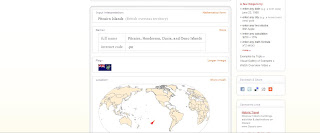
I had never heard of Google Squared or WolframAlpha before this assignment. I feel both are very beneficial as an aid in education. From my searching, I do favor WolframAlpha because it gives all factual data. I also like Google Squared, especially because you can add squares to gather more information. However, I found, and it may be because of what I searched, that a lot of the boxes didn't have the answer and said 4 possible values or something of the like. I was aware of the population gap between China, India, and the United States, though not the specific numbers. As for my previous comments about "Did You Know," I still feel the same as I did when I posted when I first watched it. However, it is important to consider population of a nation when statistic are submitted and published.

Saturday, September 11, 2010
C4T#1- Do I Dare Disturb the Universe by Scott Elias
08.25.10
Meeting to Meet
by Scott
I know this will come as a huge shock, but most people despise meetings. When I ask staff about things that are holding them back, almost to a person they have said, “Too many meetings.”
When it comes right down to it, though, these are rituals that are deeply ingrained in the culture of our school. Most schools have a similar situation.
Long, low-energy meetings tend to distract and mute the day. – Martin Fowler
The trouble with throwing out meetings completely is that they do have some value. According to a few papers summarized here, meetings can help achieve the following:
* Shared commitment
* Communicate daily status, progress, and plans to the team and any observers
* Identify obstacles so that the team can take steps to remove them
* Set direction and focus
* Build a team
Being a new leader and getting to know my staff, I’m not willing to cut out all meetings. But what I am committed to doing is making sure that every minute we spend in some kind of meeting serves to move forward the school’s mission and agenda.
Zero-Based Meeting Budgeting
We’re going to get back to basics. At the first regular, monthly meeting of our leadership team, we will remove every meeting from our calendars and begin adding back in those meetings that make sense and will move us toward our goals. We will no longer meet four times per month if we can accomplish the same objective in two highly-productive, focused meetings.
Less meeting time focused on dissemination of information
Since my first day on the job, I’ve made some changes that I hope will whittle down the sheer volume of meeting time. Depending on the sensitivity, items that are “information only” in nature go into an email to team leaders or onto our school blog or wiki. Weening people off email has gone well so far, in no small part thanks to my very flexible group of teacher leaders who have been willing to jump into some new ways of doing business.
Two things I’ve learned in trying to bring this level of change to the day-to-day business of an organization are (1) stop trying to use the “inducement” approach to improving processes and systems (see letter B of Scott’s post on RSS for PD), and (2) stop asking questions like “Do you use Google Docs?” in favor of questions like, “To which email address should I send the invite for this document we’re working on?” It’s all about positive presuppositions. Of course we’re using Google Docs! I mean, who isn’t?
I’ll let you know how it goes, but it’s a start! Look for an upcoming post with more detail on the process of paper-reduction in a 40-year-old middle school.
Interesting reads I plan to share with the team:
* The 22-Minute Meeting
* It’s Not Just Standing Up: Patterns of Daily Stand-Up Meetings
Hi Scott. My name is Brittany Schneider and I am a student at the University of South Alabama. Our class blog is http://www.edm310.blogspot.com/. I will be reading and commenting on your blog every 2 weeks. I will also be posting a copy of your blog post, along with my summary on September 12.
I believe you are right on target on the idea of meetings. Long, boring meetings do not promote productivity. Having less meetings that give good information keeps things fresh and keeps people interested.
09.11.10
What We Do, What We Think by Scott on August 6th, 2010
Hi Scott,
I have just read your earlier blog post and I must say I feel you had the right idea in starting this new position. An attempt to utilize what policies are already in place, as well as implementing your own is a great tactic to truly understanding the current position, but also being able to make it your own. I applaud you for not just accepting the methods currently set in place or trying to totally disregard the system that had been used is a great balance. I also am interested to continue reading your blog to see what does and does not work, as you try different methods out. I am looking forward to seeing which methods you try out and the result of these things. Thank you for sharing your experience,
Brittany Schneider
Meeting to Meet
by Scott
I know this will come as a huge shock, but most people despise meetings. When I ask staff about things that are holding them back, almost to a person they have said, “Too many meetings.”
When it comes right down to it, though, these are rituals that are deeply ingrained in the culture of our school. Most schools have a similar situation.
Long, low-energy meetings tend to distract and mute the day. – Martin Fowler
The trouble with throwing out meetings completely is that they do have some value. According to a few papers summarized here, meetings can help achieve the following:
* Shared commitment
* Communicate daily status, progress, and plans to the team and any observers
* Identify obstacles so that the team can take steps to remove them
* Set direction and focus
* Build a team
Being a new leader and getting to know my staff, I’m not willing to cut out all meetings. But what I am committed to doing is making sure that every minute we spend in some kind of meeting serves to move forward the school’s mission and agenda.
Zero-Based Meeting Budgeting
We’re going to get back to basics. At the first regular, monthly meeting of our leadership team, we will remove every meeting from our calendars and begin adding back in those meetings that make sense and will move us toward our goals. We will no longer meet four times per month if we can accomplish the same objective in two highly-productive, focused meetings.
Less meeting time focused on dissemination of information
Since my first day on the job, I’ve made some changes that I hope will whittle down the sheer volume of meeting time. Depending on the sensitivity, items that are “information only” in nature go into an email to team leaders or onto our school blog or wiki. Weening people off email has gone well so far, in no small part thanks to my very flexible group of teacher leaders who have been willing to jump into some new ways of doing business.
Two things I’ve learned in trying to bring this level of change to the day-to-day business of an organization are (1) stop trying to use the “inducement” approach to improving processes and systems (see letter B of Scott’s post on RSS for PD), and (2) stop asking questions like “Do you use Google Docs?” in favor of questions like, “To which email address should I send the invite for this document we’re working on?” It’s all about positive presuppositions. Of course we’re using Google Docs! I mean, who isn’t?
I’ll let you know how it goes, but it’s a start! Look for an upcoming post with more detail on the process of paper-reduction in a 40-year-old middle school.
Interesting reads I plan to share with the team:
* The 22-Minute Meeting
* It’s Not Just Standing Up: Patterns of Daily Stand-Up Meetings
Hi Scott. My name is Brittany Schneider and I am a student at the University of South Alabama. Our class blog is http://www.edm310.blogspot.com/. I will be reading and commenting on your blog every 2 weeks. I will also be posting a copy of your blog post, along with my summary on September 12.
I believe you are right on target on the idea of meetings. Long, boring meetings do not promote productivity. Having less meetings that give good information keeps things fresh and keeps people interested.
09.11.10
What We Do, What We Think by Scott on August 6th, 2010
Being a newly appointed principal has provided me with a short window of time during which I am doing a sort of “ethnography” of the school and culture. As I mentioned in an earlier post, one of my goals these first few weeks has been to try to gather an understanding of what staff is most proud of and what they’d like to see abandoned or, at least, reconsidered.
Like some other schools with diverse student populations, our students need a variety of supports – both academic and personal – to achieve “proficiency” on state tests. While I’m not a fan of this kind of assessment of our kids or our schools, as a new principal I believe that arguing about the merits of said tests is best left to the policy wonks. It’s the hand we’re dealt for now, and as a new principal I’m focusing first on those things within my control.
So my main objective in the near-term is to support my teachers in wrapping their heads around the idea that student success as measured on our state standardized tests and student success as measured by their ability to communicate, collaborate, and produce content in an interconnected, global community are not mutually exclusive.
When I first landed in the Big Chair, I ramped up my scouring of the blogs of other school leaders. What I found was an abundance of ideas, lists of tools and apps, advice on being a good Tweeter, and the like. I’m certainly guilty of posts like this…
What I’ve become increasingly focused on is moving from ideas and feel-good blog posts to action. One of my goals is to renew my use of this space and to spend time writing and reflecting about my actions in this first year as principal. I want to look at things that I actually do as a new principal that might improve systems, culture, and learning in my school with the goal of cultivating an environment that empowers students to learn and develop their identities as global citizens and world-class learners.
I’ll probably fall on my face. I might do that more than once. But at least I’ll try to maintain a good record of my thoughts and actions and how they play out in this organization. Maybe they’ll even help someone else who is entrusted with the exciting but very real responsibility of being a principal.
Some topics I will be addressing in upcoming posts:
Like some other schools with diverse student populations, our students need a variety of supports – both academic and personal – to achieve “proficiency” on state tests. While I’m not a fan of this kind of assessment of our kids or our schools, as a new principal I believe that arguing about the merits of said tests is best left to the policy wonks. It’s the hand we’re dealt for now, and as a new principal I’m focusing first on those things within my control.
So my main objective in the near-term is to support my teachers in wrapping their heads around the idea that student success as measured on our state standardized tests and student success as measured by their ability to communicate, collaborate, and produce content in an interconnected, global community are not mutually exclusive.
When I first landed in the Big Chair, I ramped up my scouring of the blogs of other school leaders. What I found was an abundance of ideas, lists of tools and apps, advice on being a good Tweeter, and the like. I’m certainly guilty of posts like this…
What I’ve become increasingly focused on is moving from ideas and feel-good blog posts to action. One of my goals is to renew my use of this space and to spend time writing and reflecting about my actions in this first year as principal. I want to look at things that I actually do as a new principal that might improve systems, culture, and learning in my school with the goal of cultivating an environment that empowers students to learn and develop their identities as global citizens and world-class learners.
I’ll probably fall on my face. I might do that more than once. But at least I’ll try to maintain a good record of my thoughts and actions and how they play out in this organization. Maybe they’ll even help someone else who is entrusted with the exciting but very real responsibility of being a principal.
Some topics I will be addressing in upcoming posts:
- Re-imagining a culture of meetings
- Developing a manageable system of academic interventions that address students’ individual needs
- Moving a 40-year-old school into the 21st century
- Paring back “initiative bloat”
- Doing my best not to reinforce the status quo
- Quite frankly, anything else that comes to mind…
Hi Scott,
I have just read your earlier blog post and I must say I feel you had the right idea in starting this new position. An attempt to utilize what policies are already in place, as well as implementing your own is a great tactic to truly understanding the current position, but also being able to make it your own. I applaud you for not just accepting the methods currently set in place or trying to totally disregard the system that had been used is a great balance. I also am interested to continue reading your blog to see what does and does not work, as you try different methods out. I am looking forward to seeing which methods you try out and the result of these things. Thank you for sharing your experience,
Brittany Schneider
Blog Post 3
I after watching Michael Wesch's "A Vision of Students Today", I see that it is a lot like my college experience. The majority of my time is spent either revolving around my schoolwork. Coincidentally, I also spend the majority of my time using technology, such as my laptop or cell phone. My time invested in sitting in a college classroom does not compare to the amount of time I spend outside of that setting doing work related to school. However, this film seems to address the "traditional" college student, one who is under 20 years old and single. I feel this does not accurately cover many of students today. From my experience, many are over 25 years old and are married or have a family. Time spent caring for the family or working a full time job should be added in to how students spend their day.
I also read Kelly Hines' blog post "It's Not About the Technology." She is absolutely correct about teachers needing to also be learners. For so many teachers, it seems that once their formal education ends, they do not feel the need to continue their education. Learning new technology and how to implement it in their teaching will greatly benefit the teacher and the students. It's not all about the technology, but in these times, it is greatly beneficial to utilize the technology available to you.
However, she is correct in saying that if a teacher does not know how to use it, it is a waste of money. Technology can also be beneficial as an aid to help students who do not benefit from a traditional lecture type setting. Just because a teacher may have been teaching for years with the same methods, that doesn't mean that their teaching style is the best way. Technology is a wonderful way to include different students with different learning styles.
After reading Karl Fisch: Is It Okay to Be A Technologically Illiterate Teacher?, I was surprised. I had never given thought to these points he made. While I knew it was beneficial to stay on top of technology, I guess I didn't realize how much of a disadvantage a teacher is put in. His statement saying "If a teacher today is not technologically literate - and is unwilling to make the effort to learn more - it's equivalent to a teacher 30 years ago who didn't know how to read and write" is very true. I had just never thought of it in those terms.
But he is absolutely correct. It is amazing how people almost boast about not having useful skills.To stay relevant and useful in your position, you must be willing to continue your education. It seems like people want to continue to make excuses for their lack of knowledge, but I feel what they need to be doing is attempting to be proactive in their profession and their own learning. Our future is technology. The longer you wait to hop aboard, the harder it will be to catch up.
I also read Kelly Hines' blog post "It's Not About the Technology." She is absolutely correct about teachers needing to also be learners. For so many teachers, it seems that once their formal education ends, they do not feel the need to continue their education. Learning new technology and how to implement it in their teaching will greatly benefit the teacher and the students. It's not all about the technology, but in these times, it is greatly beneficial to utilize the technology available to you.
However, she is correct in saying that if a teacher does not know how to use it, it is a waste of money. Technology can also be beneficial as an aid to help students who do not benefit from a traditional lecture type setting. Just because a teacher may have been teaching for years with the same methods, that doesn't mean that their teaching style is the best way. Technology is a wonderful way to include different students with different learning styles.
After reading Karl Fisch: Is It Okay to Be A Technologically Illiterate Teacher?, I was surprised. I had never given thought to these points he made. While I knew it was beneficial to stay on top of technology, I guess I didn't realize how much of a disadvantage a teacher is put in. His statement saying "If a teacher today is not technologically literate - and is unwilling to make the effort to learn more - it's equivalent to a teacher 30 years ago who didn't know how to read and write" is very true. I had just never thought of it in those terms.
But he is absolutely correct. It is amazing how people almost boast about not having useful skills.To stay relevant and useful in your position, you must be willing to continue your education. It seems like people want to continue to make excuses for their lack of knowledge, but I feel what they need to be doing is attempting to be proactive in their profession and their own learning. Our future is technology. The longer you wait to hop aboard, the harder it will be to catch up.
Subscribe to:
Posts (Atom)